
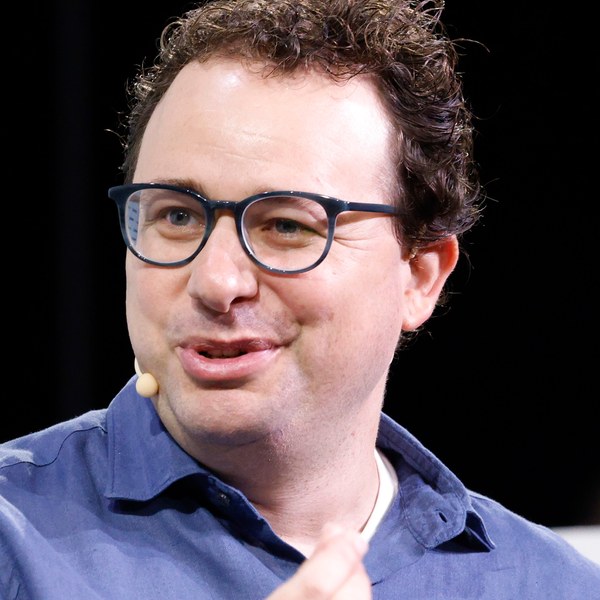
Dario Amodei is an American artificial intelligence researcher and entrepreneur who co-founded Anthropic in 2021 and serves as its chief executive. Anthropic is the company behind Claude, a family of large language models, and Amodei has positioned the firm around the idea that frontier AI can be built and deployed more safely if safety research and commercial development advance together.
Before starting Anthropic with his sister Daniela Amodei and a group of fellow researchers, he was vice president of research at OpenAI, where he worked on the systems that became the GPT line of models. He is widely cited as a leading figure in the study of AI safety and the scaling behavior of neural networks, and he writes frequently on where the technology is heading. Anthropic's profile has grown sharply in recent years, and the company filed confidentially for an initial public offering at a valuation approaching a trillion dollars.
Who Dario Amodei is
Amodei was born in San Francisco in 1983 and grew up in the city, where he graduated from Lowell High School. He represented the United States on its Physics Olympiad team in 2000, an early marker of the quantitative path he would follow through his academic and research career.
He is the older brother of Daniela Amodei, who co-founded Anthropic alongside him and serves as the company's president. The two have been described by Time magazine as among the most influential people in artificial intelligence, and Amodei has used his platform as a chief executive to argue publicly about how powerful AI systems should be governed and deployed.
Education and early research career
Amodei began his undergraduate studies at the California Institute of Technology before transferring to Stanford University, where he earned a bachelor of science degree in physics. He went on to complete a PhD in biophysics at Princeton University, studying the electrophysiology of neural circuits, and then held a postdoctoral position at the Stanford University School of Medicine.
That background in physics and computational neuroscience shaped how he approached machine learning. After leaving academia he worked at Baidu from late 2014, contributing to deep learning research, and later moved to Google, where he worked on AI research before the modern wave of large language models took hold. His scientific training in measuring and modeling complex systems carried directly into his later work on how AI models behave as they grow in size.
Founding Anthropic and his role
In 2016, Amodei joined OpenAI, eventually becoming its vice president of research. During that period he helped lead work on large generative models and on techniques for aligning model behavior with human intentions. He and a group of colleagues, including his sister Daniela, left OpenAI over differences in direction, and in 2021 they founded Anthropic as an independent AI safety and research company.
As CEO, Amodei sets the company's strategy and public posture. Under his leadership, Anthropic developed Constitutional AI, a method for training models to follow a written set of principles so they can self-correct toward less harmful responses with less direct human labeling. The company has raised large rounds of funding, expanded the Claude product line, and grown into one of the most closely watched firms in the sector. In November 2023, when OpenAI's board approached him about taking its top job and potentially merging the two companies, he declined.
Views on AI safety and scaling
Amodei is closely associated with the study of scaling laws, the observation that the capabilities of neural networks tend to improve predictably as models, data, and computing power increase. That framing informs much of how he talks about the trajectory of AI, and he has argued that the field should take both the upside and the downside of rapidly improving systems more seriously than many people do.
He has written several widely read essays on these themes. In his 2024 essay "Machines of Loving Grace," he laid out an optimistic vision of how advanced AI could accelerate progress in biology, neuroscience, and economic development. In a January 2026 follow-up titled "The Adolescence of Technology," he focused on the risks of powerful AI, outlining categories of concern that range from misaligned model behavior to misuse by bad actors and large-scale economic disruption. He has also testified before lawmakers and spoken publicly about the need for democracies to maintain a lead in AI development.
Photo of Dario Amodei at TechCrunch Disrupt 2023 by TechCrunch, licensed under CC BY 2.0 via Wikimedia Commons.
.jpg)
Frequently asked questions
Who is Dario Amodei?
Dario Amodei is an American AI researcher and entrepreneur who co-founded Anthropic in 2021 and serves as its CEO. The company builds the Claude family of large language models.
What did Dario Amodei do before Anthropic?
He was vice president of research at OpenAI, where he worked on large generative models. Earlier in his career he conducted AI research at Google and Baidu, after completing a PhD in biophysics at Princeton University.
Who co-founded Anthropic with Dario Amodei?
Amodei co-founded Anthropic in 2021 with his sister Daniela Amodei, who is the company's president, along with other former senior members of OpenAI.
What is Dario Amodei known for in AI safety?
He is known for research on AI safety and scaling laws, for Anthropic's Constitutional AI training method, and for essays such as "Machines of Loving Grace" and "The Adolescence of Technology" that discuss the benefits and risks of advanced AI. His Wikipedia biography and personal site at darioamodei.com collect much of this work.
Where is Dario Amodei based?
He is based in San Francisco, California, where Anthropic is headquartered and where he was born and raised.